High Block in Soccer
Table of Contents
Introduction
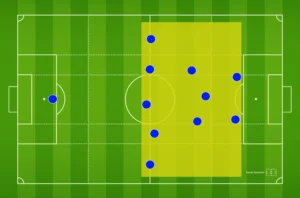
In soccer, the term “high block” refers to a strategic approach employed by a team when they are not in possession of the ball. It’s a defensive tactic, but unlike a “low block” which is focused on deep, compact defense near the team’s own goal, a high block involves applying pressure much further up the pitch.
In this comprehensive guide, we’ll learn about the key characteristics of the high block, including its strengths and weaknesses.
Key Characteristics of the High Block
The main objectives of this tactic are:
Disrupting the Opponent’s Build-Up Play: By applying pressure high up the field, the defending team aims to prevent the opposing team from comfortably building their attack from the back. This can lead to mistakes or turnovers in dangerous areas, which the pressing team can then exploit.

Controlling the Game’s Tempo: A high block can help a team dictate the pace of the game. By pressing high, they force the opposition to make quicker decisions, which can lead to errors or a less organized attacking approach.

Territorial Advantage: Maintaining a high defensive line means that the team is operating in the opponent’s half, which can be psychologically and tactically advantageous. It keeps the play away from their own goal and closer to the opponent’s goal.
Transition to Attack: If the high press is successful and the ball is recovered, the team is already in a good position to mount an immediate attack, often catching the opposition off balance.
Strengths of the High Block
Employing a high block in soccer, where the team applies defensive pressure in the opponent’s half of the field, offers several strengths and advantages:
- Forces Opponent Errors: By pressing opponents high up the pitch, the defending team can force them into making mistakes. Under pressure, players are more likely to misplace passes or lose possession, creating opportunities for the pressing team to win the ball in dangerous areas.
- Dominates Territory: A high block strategy keeps the play in the opponent’s half, allowing the pressing team to control more of the pitch. This territorial advantage can be psychologically intimidating for opponents and can boost the confidence of the pressing team.
- Facilitates Quick Attacks: Recovering the ball closer to the opponent’s goal means the distance to create scoring opportunities is reduced. This can lead to more direct and potent attacking play, as the team can quickly capitalize on the opposition’s disorganization.
- Controls the Game’s Tempo: Implementing a high block allows a team to dictate the pace of the game. It can slow down or disrupt the opponent’s buildup play, forcing them to play at a tempo that suits the pressing team’s strategy.
- Intimidates and Disrupts Opponents: Constant pressure can be mentally and physically draining for opponents. It can disrupt their game plan, limit their creative play, and reduce their time and space to make effective decisions.
- Encourages Team Cohesion and Work Rate: Successfully implementing a high block requires excellent communication, teamwork, and a collective work ethic. This can foster a strong sense of unity and determination within the team.
- Exploits High Defensive Line: For teams with fast attackers, a high block can exploit opponents who play with a high defensive line, creating opportunities for quick breaks and through balls behind the defense.
- Enhances Fan Engagement: A high pressing game is often seen as exciting and proactive, which can enhance fan support and create a more intimidating atmosphere for opponents.

Weaknesses of the High Block
While a high block in soccer has several strengths, it also comes with notable weaknesses and risks:
- Vulnerability to Counter-Attacks: One of the most significant risks of a high block is the space it leaves behind the defense. If the opposing team can bypass the press, they can exploit this space with fast attackers or through balls, leading to dangerous counter-attacking opportunities.
- Physical Demands: Maintaining a high block requires high levels of fitness and stamina from the players. The constant need to press and close down opponents can be physically draining, potentially leading to fatigue, especially in the later stages of a match.
- Requires High Levels of Coordination and Discipline: A successful high block depends on excellent coordination and tactical discipline among players. If even one player fails to press effectively or maintain the line, it can create gaps for the opponent to exploit.
- Potential for Defensive Disorganization: The high line of defense can lead to disorganization at the back, especially if the pressing players do not maintain their shape or fail to communicate effectively. This disorganization can be exploited by skilled opponents.
- Risk of Fouls and Cards: Aggressive pressing can sometimes lead to fouls, especially if players are overly eager or mistime their challenges. This can result in free-kicks in dangerous areas or accumulation of yellow cards, impacting team discipline and player availability.
- Challenges Against Teams with Strong Ball Control: Teams that are skilled at maintaining possession and have players adept at handling pressure can negate the effectiveness of a high block, as they can maneuver around the press or find spaces within it.
- Mental Fatigue: Along with physical demands, a high block requires constant concentration and decision-making under pressure, which can lead to mental fatigue. Players need to constantly assess when to press, when to hold their position, and how to coordinate with teammates, which can be mentally taxing over the course of a match.
- Weather and Pitch Conditions: Adverse weather conditions or poor pitch quality can hinder the effectiveness of a high press. Slippery or heavy fields can slow down players and make it more difficult to maintain the intensity required for an effective high block.
- Can Be Exploited by Long Balls: Teams with good long-ball capabilities can bypass a high press by quickly transitioning from defense to attack with long passes to forwards positioned behind the pressing defenders.
How to Beat a High Block
Here are several strategies that teams often use to overcome a high block:
- Quick and Accurate Passing: One effective way to beat a high press is through quick, short passing. This requires players to be technically proficient and able to make fast decisions. Quick passing can help in moving the ball swiftly and finding spaces in the pressing team’s formation.
- Use of Goalkeeper as an Extra Player: The goalkeeper can act as an additional outfield player to create numerical superiority at the back. This can help in circulating the ball and finding an open player to initiate the play.
- Long Balls Over the Top: Playing long balls over the pressing line can exploit the space behind the high block. This is particularly effective if you have fast forwards who can run onto these long passes and create scoring opportunities.
- Switching Play: Using cross-field or diagonal passes to quickly switch the play can be effective. This exploits the space on the opposite side of the field, as it can be challenging for the pressing team to maintain their intensity and shape across the entire width of the pitch.
- Drawing the Press and Playing Through It: By intentionally attracting the press in one area and then quickly playing out of it, teams can create and exploit spaces. This requires composure under pressure and precise execution.
- Targeting Weak Points in the Press: Every pressing team has weaker links or moments when their press is not perfectly coordinated. Identifying and exploiting these moments or players can help in breaking the press.
- Using Skilled Dribblers: Players who are confident in dribbling can sometimes beat the press by taking on and bypassing opponents. This can break the pressing team’s structure and create opportunities for counter-attacks.
- Maintaining Composure: It’s crucial for players not to panic under the high press. Maintaining composure and sticking to the game plan is key in overcoming a high block.
- Physical Conditioning: Since playing against a high block can be physically demanding, superior fitness levels can help a team to maintain their tactical approach throughout the match.
- Flexible Formation and Tactics: Sometimes, adjusting the team’s formation or tactics, such as using a more direct style of play or employing a false nine to create an extra midfielder, can help in countering a high block.
- Utilizing the Wings: Expanding the game to the wings can stretch the pressing team’s formation. Wide players can then either advance with the ball or deliver crosses into the box, exploiting the spaces left by the high block.

What Teams Use a High Block?
Here are a few examples of teams that have utilized a high block in their tactical setups:
- Liverpool (under Jürgen Klopp): Klopp’s Liverpool is renowned for its “Gegenpressing” or counter-pressing style, where players aggressively press the opposition immediately after losing possession, often employing a high block.
- Manchester City (under Pep Guardiola): Guardiola’s teams are known for their possession-based style and high pressing. Manchester City often uses a high block to dominate possession and control games.
- Bayern Munich: Particularly under coaches like Pep Guardiola and Hansi Flick, Bayern Munich has effectively used a high block, combining it with their high-tempo, attacking style of play.
- Borussia Dortmund: Dortmund has a history of playing a high-energy, pressing game, often employing a high block, especially notable during Jürgen Klopp’s tenure.
- RB Leipzig: Known for their aggressive pressing and high-intensity play, RB Leipzig often employs a high block as part of their tactical approach.
- Ajax: Ajax, especially under coaches like Erik ten Hag, has been known for a proactive style of play that includes high pressing and a high defensive line.
- Barcelona: Traditionally, especially under Pep Guardiola, Barcelona employed a high pressing style. While their approach has evolved over the years, elements of the high block remain.
- Paris Saint-Germain (PSG): With their array of attacking talents, PSG under various coaches has also shown tendencies to use a high block, especially in games where they dominate possession.
- Chelsea: Under coaches like Thomas Tuchel, Chelsea has at times employed a high pressing system, though they have also been versatile in their tactical approaches.
- Tottenham Hotspur (under Mauricio Pochettino): During Pochettino’s tenure, Spurs were known for their high-energy pressing game, often employing a high block.
It’s important to note that the use of a high block is not static and can vary depending on the coach, the players at their disposal, and the specific tactical setup for each game. Additionally, teams may adjust their strategies in-game and over time.
Conclusion
Mastering the high block in soccer is not just about physical prowess; it’s a strategic move that can significantly impact the game’s outcome. By applying intense pressure on the opposition in their own half, teams have been able to dominate possession, create scoring opportunities, and disrupt the rhythm of their opponents.
Employing a high block also comes with risks. It can leave space behind the defense which can be exploited by teams that are good at quick counter-attacks or long passes to fast attackers.
This tactic requires not only physical fitness and tactical discipline from the players but also a deep understanding of the game and a high level of coordination within the team.
FAQs
To effectively implement a high block, a team needs well-conditioned players with good understanding of pressing triggers and spatial awareness. The team must work cohesively, with forwards and midfielders applying pressure in a coordinated manner. Communication and quick decision-making are crucial. Teams often practice specific pressing patterns and cues to recognize when to engage in a high press.
While a high block can be a powerful tactic, its effectiveness varies depending on the opponent’s style of play and skill level. Teams that are adept at quick, long-ball counter-attacks or have fast, skillful forwards can exploit the spaces left by a high block. It’s more effective against teams that build up play slowly or struggle under pressure. Coaches often analyze their opponents before deciding whether to implement a high block strategy.
Low Block in Soccer
8 min read
In this comprehensive guide, we’ll explain the low block in more detail, explain some strengths and weaknesses as well as identify teams which have successfully implemented the strategy.