Low Block in Soccer
Table of Contents
Introduction
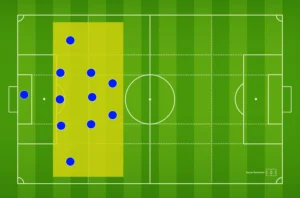
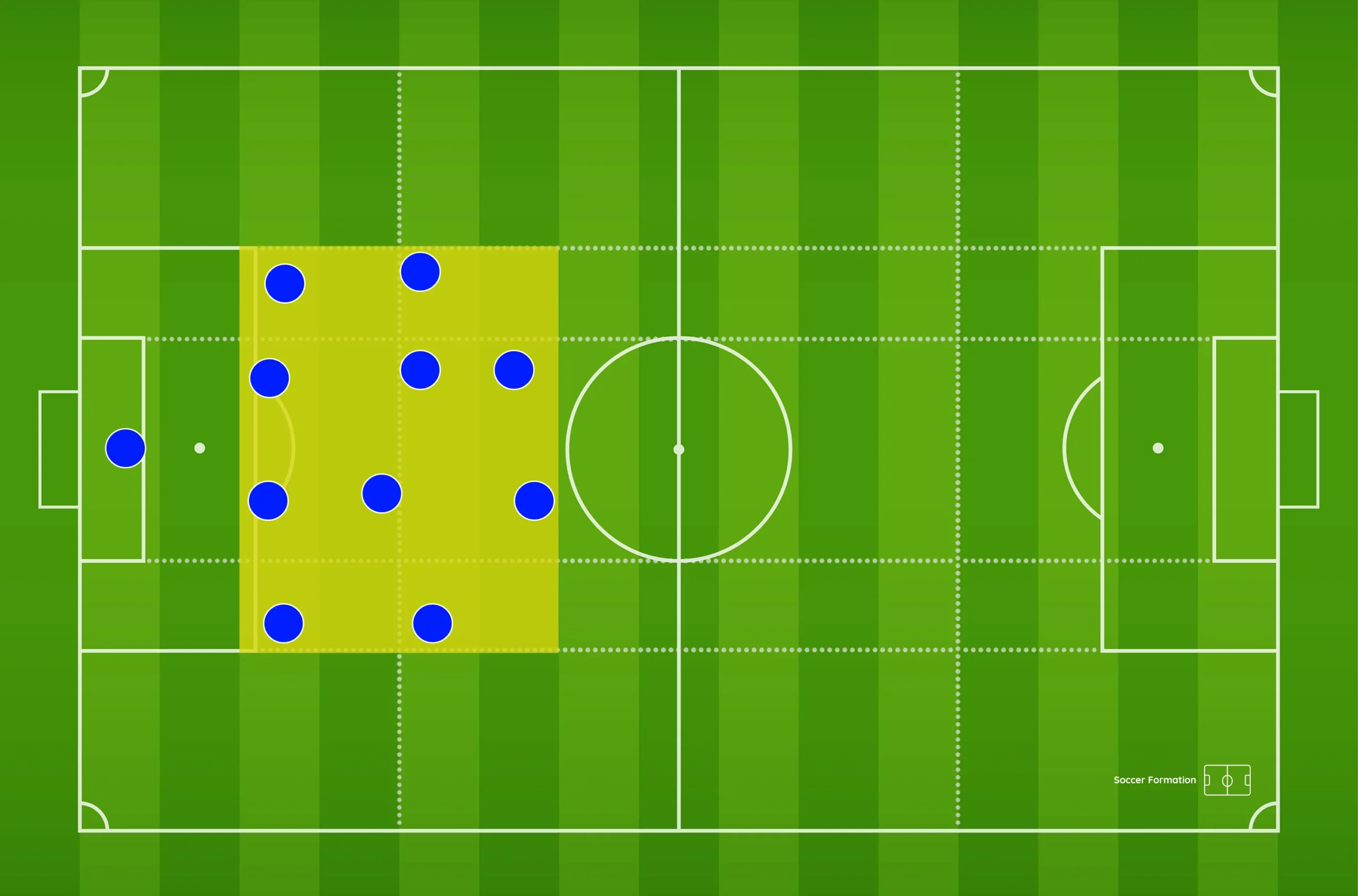
In soccer, a “low block” refers to a defensive strategy rather than a specific type of physical block or tackle. This strategy involves a team dropping back in a compact formation towards their own goal. The primary objective of a low block is to reduce the space available for the opposing team, particularly in the more dangerous areas of the pitch near the goal.
In this comprehensive guide, we’ll explain the low block in more detail, explain some strengths and weaknesses as well as identify teams which have successfully implemented the strategy.
Key Characteristics of the Low Block
Here’s a more detailed look at the low block in soccer:
Defensive Formation: In a low block, the team’s defenders, along with midfielders, position themselves closer to their own goal, often sitting deep in their own half. This formation is usually horizontally and vertically compact, making it difficult for the opposing team to find spaces through or around the defense.

Focus on Space Denial: The key principle of a low block is to deny the opposition space, especially in and around the penalty area. By congesting these areas, the defending team makes it harder for the attacking team to create goal-scoring opportunities.

Counter-Attacking Strategy: Teams employing a low block often rely on counter-attacks. Once they regain possession, they aim to quickly transition to attack, exploiting the spaces left by the opposing team’s players who have moved forward in search of a goal.
Discipline and Patience: A low block requires a high level of discipline and patience from the players. They need to maintain their formation, resist the urge to chase the ball, and stay focused on their defensive duties.
Physical and Mental Demands: This strategy can be physically and mentally demanding, as players must remain alert and maintain their concentration over long periods while often facing sustained pressure from the opposition.
Effectiveness Against Stronger Teams: The low block is often used by teams that consider themselves weaker than their opponents. By reducing the space and opportunities for more skilled players, they can level the playing field and increase their chances of securing a favorable result.
Strengths of the Low Block
Here are some of the key strengths of employing a low block:
- Reduced Space for Opponents: By condensing the space, especially in the defensive third, the low block limits the room available for the attacking team to maneuver. This makes it harder for opponents to find gaps in the defense, play through-balls, or execute intricate passing moves near the goal.
- Minimizing Goal Scoring Opportunities: With less space to exploit, the attacking team often struggles to create clear goal-scoring opportunities. This is particularly effective against teams that rely on quick, short passes or have players skilled at dribbling through tight spaces.
- Forces Long Shots or Crosses: Teams facing a low block are often left with no option but to attempt long-range shots or crosses from wide areas, which are generally lower-percentage scoring opportunities. Goalkeepers and defenders are typically more comfortable dealing with these kinds of threats.
- Strengthens Team Unity and Discipline: Successfully implementing a low block requires excellent communication, discipline, and teamwork. Players must be constantly aware of their positioning, maintain the team’s shape, and move as a cohesive unit. This can strengthen team unity and collective defensive responsibility.
- Effective Against High-Pressing Teams: The low block can be particularly effective against high-pressing opponents. As these teams push up the field, they leave space behind their defense, which can be exploited through quick counter-attacks once the low-block team regains possession.
- Conserves Energy: By focusing on maintaining position rather than aggressively chasing the ball, players can conserve energy. This can be crucial in matches where the team is outmatched in terms of skill or physicality, or in situations where they need to maintain a result over a long period.
- Psychological Impact on Opponents: A well-organized low block can be frustrating for the attacking team. This frustration can lead to rushed decisions, mistakes, or a deviation from their game plan, which the defending team can exploit.
- Suitable for Teams with Strong Defenders: Teams with strong, physically imposing defenders who are good in the air and adept at making tackles and clearances can thrive in a low-block system.
- Counter-Attacking Opportunities: The low block can create opportunities for rapid counter-attacks, especially if the team has fast players or those with good long-passing abilities. As the opponent commits more players forward, they become vulnerable to quick breaks.
- Leveling the Playing Field: For teams that might lack the same level of technical skill or attacking prowess as their opponents, a low block can level the playing field by neutralizing these disadvantages and focusing on a more defensive, disciplined approach
Weaknesses of the Low Block
Here are some of the key weaknesses associated with the low block:
- Vulnerability to Long-Range Shots: By dropping deep and allowing the opposition more space outside the penalty area, teams using a low block can be more susceptible to conceding goals from long-range shots, especially against players who are proficient at striking from distance.
- Increased Pressure on Defense: The low block strategy often invites pressure from the opposition, leading to prolonged periods of defending. This can be physically and mentally taxing for defenders and can lead to mistakes due to fatigue or loss of concentration.
- Limited Offensive Presence: As the low block focuses heavily on defense, it often results in a reduced attacking threat. Teams may struggle to retain possession or create meaningful offensive plays, leading to fewer scoring opportunities.
- Reliance on Counter-Attacks: While counter-attacks can be an effective way to score, over-reliance on them can be risky. If the opposing team is well-organized and quick to recover, it can neutralize these counter-attacking opportunities.
- Difficulty in Regaining Possession: Since the team is positioned deeper in their own half, it can be more challenging to regain possession of the ball. This can lead to the opposition controlling the tempo and rhythm of the game.
- Space for Opposition Full-Backs: Employing a low block often leaves space on the flanks, particularly for the opposition’s full-backs to advance and support attacks. This can lead to an increased number of crosses into the box, putting pressure on the defense.
- Psychological Impact on the Defending Team: Constantly defending can be mentally draining and may lead to a defensive mindset among players. This mindset can be hard to break out of when the team needs to transition to a more attacking approach.
- Risk of Conceding Set-Pieces: As the defending team is often forced to make numerous tackles and interceptions near their goal, there’s an increased risk of conceding free-kicks and corners. This can be particularly problematic against teams that are strong in set-piece situations.
- Challenges in Changing Tactics: If a team needs to shift from a low block to a more attacking strategy, perhaps due to falling behind in a match, this transition can be difficult. Players may find it challenging to switch mindsets and tactics quickly.
- Potential for Defensive Errors: The compact nature of a low block can sometimes lead to confusion and errors in defense, especially if communication is lacking. This can be exploited by skilled attackers who can find and create spaces in tight areas.
How to Beat a Low Block
Here are several strategies and tactics that can be effective in breaking down a low block:
- Quick and Precise Passing: Quick, short passes can help in moving the defense around and creating gaps. One-touch passing and maintaining a high tempo can disrupt the defensive structure of a low block.
- Utilize Width: Stretching the play wide forces the defending team to spread out, potentially opening up spaces in the center. Using full-backs and wingers effectively can be key in stretching a low block.
- Patient Build-Up Play: Sometimes, patience is crucial. Keeping possession and circulating the ball can draw defenders out of position, creating openings to exploit.
- Vertical Passing: Incorporating vertical, forward passes can break lines of defense. This requires players who can accurately deliver and receive these passes under pressure.
- Movement Off the Ball: Intelligent movement off the ball is essential. Players need to constantly reposition themselves, making runs behind the defense, and interchanging positions to create confusion and disrupt the defensive structure.
- Long-Range Shooting: If the defense is sitting very deep, it might leave space for shots from outside the box. Players with the ability to strike from distance can be an asset against a low block.
- Target Aerial Strength: Utilizing aerially strong players for crosses and long balls can be effective, especially if the attacking team has a height and physical advantage.
- Set-Pieces: Efficient use of set-pieces (corners, free-kicks) can be crucial in breaking down a low block, as these situations can create goal-scoring opportunities through structured plays.
- Overloading Zones: Overloading certain areas of the pitch (like one side) can draw defenders out and create space elsewhere. This requires coordinated team movement and awareness.
- Utilize Skillful Players: Dribblers and players with individual flair can break down a low block by drawing defenders and creating space for others.
- Quick Transitions: Capitalizing on moments of transition, especially after regaining possession, can catch the defending team off guard before they can fully organize into their low block.
- Substitutions and Tactical Adjustments: Bringing on fresh legs or players with different skill sets, and making tactical adjustments can provide new challenges for the defending team to deal with.
- Psychological Pressure: Maintaining attacking pressure can lead to frustration and mental fatigue for the defending team, potentially leading to mistakes.
- High Defensive Line: Playing a high defensive line can compress the space and keep the play in the attacking half, although this comes with the risk of counter-attacks.
- Encourage Full-Backs to Join Attack: Full-backs joining the attack can add extra numbers and width, providing more options for crosses and combination play.

What Teams Use a Low Block?
Here are some examples of teams that have utilized a low block in their tactical setups:
- Atletico Madrid: Under coach Diego Simeone, Atletico Madrid has been known for its strong defensive organization. Simeone’s tactics often involve a disciplined, compact low block that makes Atletico tough to break down, coupled with effective counter-attacking.
- Burnley FC: In the English Premier League, Burnley, particularly under former manager Sean Dyche, often employed a low block. Their approach was characterized by solid and disciplined defending, relying on physicality and aerial strength.
- Getafe CF: In La Liga, Getafe, under José Bordalás (until 2021), was known for a defensive and aggressive style of play, often resorting to a low block to frustrate opponents and grind out results.
- Inter Milan: Italian giants Inter Milan, especially under former coach Antonio Conte, occasionally used a low block, particularly in big matches against offensively strong teams, combining this with quick transitions to attack.
- Greece National Football Team: Historically, the Greece national team, particularly during their surprising Euro 2004 victory, was famous for its defensive approach, using a low block effectively throughout the tournament.
- Crystal Palace: In recent seasons, Crystal Palace has shown tendencies to use a low block, especially when facing top-tier teams in the Premier League, focusing on maintaining defensive solidity.
Conclusion
In summary, a low block in soccer is a tactical approach focused on deep, compact defending to limit the attacking space of the opposition, often used as a strategy against teams with strong offensive capabilities.
It’s important to note that the use of a low block is not static and can change based on a team’s evolution, the manager’s tactics, and the players at their disposal. Additionally, even teams known for more attacking styles may occasionally adopt a low block in certain match situations, such as protecting a lead against a strong opponent. The effectiveness of this strategy depends on the players’ discipline, the team’s organization, and often, the specific dynamics of the match.
FAQs
The terms “low block” and “parking the bus” in soccer both refer to defensive strategies, but they are not exactly the same, although they share some similarities. Understanding the nuances between them can provide a clearer picture of tactical approaches in soccer.
Low Block:
– A low block is a structured defensive strategy where a team sets up with a compact formation deep in their own half.
– The focus is on reducing space for the opposition, especially in and around the penalty area, making it difficult for them to create goal-scoring opportunities.
– While it is a defensive setup, a low block can be part of a broader tactical plan that includes counter-attacks. Teams employing a low block may still actively seek opportunities to score, typically through quick transitions.
– The low block requires discipline and organization, with players maintaining their shape and working together to close down spaces.
Parking the Bus:
– “Parking the bus” is a colloquial term often used to describe an extremely defensive strategy. It implies that a team is putting virtually all its players behind the ball, focusing solely on defense, often with little to no intention of attacking.
– This term is usually used in a somewhat negative or critical context, suggesting a team is being overly defensive, sometimes to the point of being unwilling to play active soccer.
– Teams accused of “parking the bus” are often seen as using this tactic to hold onto a lead or secure a draw, especially against a team that is perceived to be superior in terms of skill or attacking prowess.
– Unlike a low block, which is a more nuanced and strategic defensive approach, “parking the bus” is often seen as a last-ditch, desperate measure to prevent conceding goals.
In summary, while both a low block and “parking the bus” are defensive strategies, a low block is generally viewed as a more structured and tactical approach, potentially part of a larger game plan that includes counter-attacking. In contrast, “parking the bus” is often used to describe an extremely defensive posture with little emphasis on attacking play, typically employed to cling to a narrow lead or secure a draw.
Mid Block in Soccer
8 min read
In this comprehensive guide, we’ll explain the mid block in more detail, explain some strengths and weaknesses as well as identify teams which have successfully implemented the strategy.