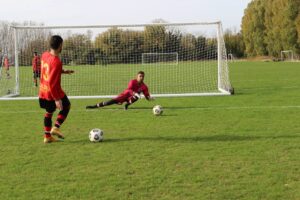
The Sweeper-Keeper: Combining Defense and Playmaking in Soccer
Table of Contents
Introduction
The Sweeper-Keeper in soccer is a playing position that is gaining popularity in modern football, redefining the traditional boundaries of the goalkeeper and bringing a new dimension to the game.
In this article, we’ll explore the requirements for the sweeper-keeper, from lightning reflexes to fearless ventures outside the penalty area, and jaw-dropping ability to launch attacks.

Strengths of the Sweeper-Keeper
Here are some of the strengths of the Sweeper-Keeper in soccer:
- Ball at Their Feet: Must be comfortable and confident with the ball at their feet, acting as an extra defender on the field, and to help their team maintain possession of the ball
- Ball-handling Skills: Must have excellent ball-handling skills, which means they can act as a first line of defense by intercepting or clearing the ball before the opposition can launch a counterattack. This skill also enables them to initiate attacking plays by quickly distributing the ball to teammates
- High Level of Mobility: Often more mobile than traditional goalkeepers. They are comfortable moving out of their goal area to provide additional defensive support, which can help to relieve pressure on the team’s defenders
- Tactical Awareness: Requires a high level of tactical awareness to be effective. They need to be able to read the game well and anticipate the opposition’s moves, as well as be aware of their own team’s attacking opportunities
- Ability to Start Counter-attacks: Have the ability to start counter-attacks by quickly releasing the ball to teammates after making a save or intercepting a pass. This ability can catch the opposition off guard and create scoring opportunities for the Sweeper Keeper’s team
- Communication Skills: Needs to be a good communicator, as they often need to direct their teammates and organize the defense from a position outside of the traditional goalkeeper area.
Weaknesses of the Sweeper-Keeper
Here are a few weaknesses associated with the role:
- Risk of Mistakes: When venturing far from the goal line, it exposes the team to the risk of errors. If the goalkeeper misjudges a situation or makes a poor decision when dealing with the ball, it can lead to turnovers or even concede goals
- Vulnerability to Long Balls: By moving out of the goal area, the Sweeper-Keeper leaves the net temporarily unattended. Opponents who recognize this can exploit the space by playing long balls or attempting shots from a distance, potentially catching the goalkeeper off-guard
- Lack of Defensive Cover: When out of position, there may be a temporary gap in the defense, leaving the team vulnerable to through balls or quick counterattacks. If the opposing team can exploit this gap, they may create scoring opportunities
- Communication and Coordination: The role requires effective communication and coordination with the defensive line. If there is a lack of understanding or communication breakdown, it can lead to confusion and defensive disorganization, creating openings for the opposition
- Greater Pressure and Expectations: Often expected to excel not only in shot-stopping but also in playing the ball with their feet and initiating attacks. The added pressure to perform both defensive and offensive duties can sometimes affect their decision-making or introduce added stress.
Famous Sweeper-Keepers
There have been several famous Sweeper-Keepers in the history of soccer. Here are some notable examples:
- Manuel Neuer: The German goalkeeper, who currently plays for Bayern Munich and the German national team, is renowned for his Sweeper-Keeper style. Neuer’s ability to play as a “sweeper” outside his penalty area, his ball-playing skills, and his quick decision-making have made him one of the most influential goalkeepers in recent years
- René Higuita: The Colombian goalkeeper, known for his flamboyant style, popularized the Sweeper-Keeper role in the late 1980s and early 1990s. Higuita was famous for his ability to dribble past opponents and execute audacious plays, including his scorpion kick save during a friendly match against England in 1995
- Fabien Barthez: The French goalkeeper, who played for clubs like Marseille and Manchester United, was known for his Sweeper-Keeper qualities. Barthez possessed excellent reflexes, distribution skills, and a willingness to leave his goal line to support the defense
- Jorge Campos: The Mexican goalkeeper, known for his vibrant and colorful jerseys, was not only an exceptional shot-stopper but also a Sweeper-Keeper. Campos was known for his agility, quickness off his line, and his ability to initiate attacks with his precise distribution
- Ederson: The Brazilian goalkeeper, currently playing for Manchester City, has become a prominent figure in the Sweeper-Keeper role. Ederson is highly skilled with the ball at his feet, often participating in build-up play, and is known for his long-range passing ability.
Training Sessions for a Sweeper-Keeper
- Sweeper-Keeper Training with Miguel Miranda – Tips and strategies to help you with your decision-making when you play as a sweeper keeper
- How To Be A Sweeper-Keeper: Goalkeeper Sweeping Tutorial – Useful information on how to play the role of sweeper keeper. Includes some real-life examples of sweeper keepers in action.
FAQs
The main difference between a goalkeeper and a sweeper-keeper lies in their playing style and responsibilities within the team:
Goalkeeper: The primary role of a goalkeeper is to protect the goal and prevent the opposing team from scoring. Goalkeepers typically stay closer to their goal line and focus on shot-stopping, positioning, and commanding their defense. They are responsible for making saves, organizing the defensive line, and stopping shots from opponents.
Sweeper-Keeper: The concept of a sweeper keeper emerged as a more modern approach to goalkeeping. A sweeper-keeper, in addition to traditional goalkeeping duties, actively participates in defensive play outside of the penalty area. They are more involved in the team’s build-up play, ball distribution, and can act as an additional defender when required. Sweeper-keepers often venture out of their goal area to intercept through balls, clear danger, or provide an extra passing option to start attacking moves.
In summary, while both goalkeepers and sweeper-keepers share the fundamental goalkeeping responsibilities, the sweeper-keeper takes on a more proactive role in the team’s overall gameplay. Th
Here are some key aspects and steps to consider:
Develop Good Goalkeeping Skills: Start by mastering the fundamental skills of goalkeeping such as shot-stopping, positioning, handling crosses, and distribution. These skills form the foundation for a sweeper-keeper’s game
Improve Ball Control and Footwork: Work on your ball control, passing accuracy, and footwork. Sweeper-keepers need to be comfortable with the ball at their feet and have the ability to play accurate passes to initiate attacks or find teammates
Understand Tactical Concepts: Familiarize yourself with the tactical concepts and strategies employed by teams that utilize a sweeper-keeper. Study how they integrate the goalkeeper into the team’s build-up play and defensive organization
Enhance Decision-Making: Often need to make quick decisions outside of their penalty area, including when to come off their line to intercept through balls or clear danger. Practice reading the game, assessing situations, and making the right decisions based on the circumstances
Communication and Coordination: Develop strong communication skills to effectively communicate with the defensive line and ensure coordination between the goalkeeper and defenders. Clear and concise communication is essential for maintaining a well-organized defense
Fitness and Speed: Work on your physical fitness and speed as sweeper-keepers are required to cover ground quickly when needed, whether it’s to clear a loose ball or provide support to the defense outside the penalty area
Continuous Learning and Adaptation: Stay updated on the latest trends, techniques, and strategies in modern goalkeeping. Adapt to the changing demands of the game and be open to learning new skills that can enhance your ability
Seek Guidance and Coaching: Consider working with a goalkeeper coach who can provide specific training tailored to the role. They can provide guidance, technical feedback, and help you refine your skills.
Remember, becoming a sweeper-keeper requires practice, dedication, and a deep understanding of the position’s demands. Regular training, game experience, and a willingness to continually improve will contribute to your development as a sweeper-keeper.
The role of the sweeper-keeper in modern soccer is increasingly recognized for its significant advantages. Here are some of the key benefits of having a sweeper-keeper on a team:
Greater Defensive Coverage: Sweeper-keepers often position themselves further from the goal than traditional goalkeepers, allowing them to act as an additional outfield player when necessary. This positioning allows them to sweep up through balls and cover defensive holes, hence the term “sweeper.”
Initiating Attacks: The ability to play as an outfield player also allows the sweeper-keeper to participate in the build-up of attacks. They can distribute the ball more effectively and accurately, contributing to the overall team’s possession and offensive play
High-pressing Strategy: Teams that employ a high-pressing strategy benefit from having a sweeper-keeper. In a high press, the defenders push up the pitch to close down space, which can leave the team vulnerable to long balls behind the defense. A sweeper-keeper can mitigate this risk by covering the space behind the defense line
Psychological Advantage: The presence of a sweeper-keeper can pose a psychological challenge to opponents. Strikers must be mindful not only of the defenders but also of a goalkeeper who is capable of intervening in open play. This can force them to rethink their tactics, giving the defending team a mental edge
Increased Flexibility: Having a sweeper-keeper offers tactical flexibility. In certain scenarios, the sweeper-keeper can step into a defensive midfield role if a player is sent off or if the coach wants to change formation during the game without making a substitution
Modern Tactical Adaptation: Soccer has evolved to become a game that values possession and fluidity between positions. A sweeper-keeper, with their ability to play with their feet and initiate plays, fits perfectly into this modern interpretation of the game.
However, it’s important to remember that while the sweeper-keeper role offers many advantages, it also requires a player with a high skill set and an understanding of the game to perform this role effectively.
The Importance of Versatile Players in Soccer
8 min read
Read about the importance of versatile players in soccer, highlighting their value and how they’re shaping the future of this global sport.