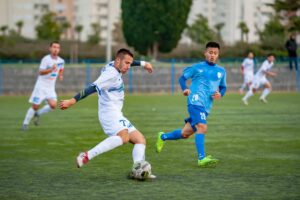
Soccer Player Roles & Responsibilities
Table of Contents
Introduction
Soccer is one of the most popular sports in the world, and its rules and regulations are fairly easy to understand. However, one of the most complicated elements of the game is understanding the different positions that players play on the field. Each position has its own unique responsibilities, and mastering them all is key to being a successful soccer player.
This article will provide a comprehensive overview of the different player positions in soccer and the responsibilities that come with them.
Defense
The defense in soccer is the group of players on the team whose primary responsibility is to prevent the opposition from scoring. This is usually done by blocking shots, intercepting passes, and tackling opposing players. A team’s defense will also work together to protect their goal and stop attacks from the opposition. Roles within the defence include the Goalkeeper, Sweeper Keeper, Center-Back, Full-Back and Wing-Back.

Goalkeeper
The goalkeeper is the last line of defense for a soccer team and is responsible for preventing the opposing team from scoring. The goalkeeper’s duties include organizing the defense, stopping shots on goal, communicating with defenders, and catching or punching away crosses and through balls.
READ: The Last Line of Defense: Understanding the Crucial Role of a Goalkeeper in Soccer
Sweeper Keeper
The sweeper goalkeeper is a modern soccer tactic where the goalkeeper is used to play a more active role in the game. This tactic involves the goalkeeper taking a more advanced position on the field, typically behind the defensive line, to provide additional defensive coverage and to be an outlet for counter-attacks. The sweeper goalkeeper is also expected to be able to start attacks by playing the ball out of the back, either through passing or dribbling.
READ: The Sweeper-Keeper: Combining Defense and Playmaking in Soccer
Center-Backs (CB)
Center-backs (CBs) are responsible for defending the center of the field, protecting the goal and providing support to the full-backs. They may also be asked to initiate attacking moves by playing the ball out of defence.
READ: The Critical Role of Center-Back in Soccer: Mastering the Position
The center back is a defensive position in soccer. The main role of the center-back is to provide defensive cover for the goalkeeper, as well as to organize and direct the defense. They are usually the tallest and most physically imposing players on the field and are usually the last line of defense before the goalkeeper. Center-backs are usually responsible for marking the opposing team’s most dangerous offensive player, and they are also often tasked with making long clearances up the pitch to start an attack.
Full-Backs (FB)
The two full-backs (Left: LB & Right: RB) are responsible for marking the opposition’s wingers and providing width to the team’s attack. They may also be asked to support the central midfielders in possession and help to recycle the ball.
The full-back is a position in soccer that is typically responsible for providing defensive support and width to the team. The full-back defends against the opposing team’s attackers, while also providing a passing option to the midfield and attack. They are usually the first line of defense and are responsible for tackling, blocking shots, and clearing the ball away from danger. Full-backs also play a crucial role in attacking, providing crosses and overlapping runs to support the attack.
READ: Mastering the Art of Full-Back Play: Key Skills and Strategies
Wing-Backs (WB)
The Wing-Back is a position in soccer that is a hybrid of both a defender and a midfielder. The Wing-Back is expected to provide both defensive and attacking support, by helping to defend in the defensive third, while also pushing forward on the attack and providing support to the midfielders and forwards.
Wing-Backs must be able to defend with precision and power, while also having the vision and creativity to make well-timed runs forward and provide accurate passes and crosses into the box.
READ: The Rise of Wing-Backs in Soccer’s Modern Era
Midfield
The midfielders are the engine of the team, as they are responsible for controlling the flow of the game. They are the link between the defenders and attackers and must be able to move the ball quickly and accurately between the two.
Midfielders must also be able to pass the ball accurately and efficiently and also be able to shoot from distance. It is important for midfielders to have good vision and the ability to make quick decisions.

Center-Midfield
The central midfielders (CMs) are responsible for controlling the tempo of the game, distributing the ball to the attackers, and providing support to the defence. They may also be asked to support the forwards in attacking situations and help to create scoring chances
Central Defensive Midfield (CDM)
The Central Defensive Midfielder is a key part of a team’s midfield line. The CDM has many responsibilities, including helping the team maintain possession, breaking up the opponent’s attacks, and providing defensive support to the back line.
The CDM is often the last line of defense before the goalkeeper, and as such is expected to be a strong tackler and to have exceptional awareness and positioning. The CDM is also expected to contribute to the build-up of attacks from the back, using both short and long passes to start the team’s attacks.
READ: The Unsung Hero: Exploring the Vital Role of the Central Defensive Midfielder (CDM) in Soccer
Central Attacking Midfield (CAM)
The Central Attacking Midfielder is an important position in soccer. The CAM’s primary role is to link the defense and attack by providing support to the forwards, while also helping to create goal-scoring opportunities.
The CAM is usually the most creative and technically gifted player on the team and is responsible for controlling the tempo of the game, distributing passes to teammates, and attacking the goal. The CAM is also expected to play a role in the defensive phase of the game, helping out the midfielders and defenders when needed.
READ: Unlocking the Playmaker: The Role of the Central Attacking Midfielder in Soccer (CAM)
Wide Midfield (LM & RM)
The two wide midfielders (LM & RM) are responsible for providing pace and creativity to the team’s attack, and making runs down the flanks to create scoring opportunities. They may also be asked to support the fullbacks when defending an opposition attack.
Winger (LW & RW)
The role of the winger in soccer is to provide width in the attacking third of the field and help to move the ball up the field. They are typically fast players who use their speed and dribbling skills to beat defenders and get crosses into the box. Wingers are also responsible for tracking back and helping out the full-backs in defensive situations.
The winger is a midfielder who plays on either side of the pitch, typically on the right or left side. The winger’s primary responsibility is to attack down their respective flank and create scoring chances for their team by getting behind the defense and crossing the ball into the box or making penetrating runs with the ball. They also have defensive responsibilities, such as tracking back to help their full-back or pressuring the opposition’s flank players.
Carrilero
A Carrilero is a soccer position that is found in the midfield. It is a specialized role that requires the player to stay in a narrow lane in the midfield and provide support for both the defensive and offensive aspects of the game. The Carrilero is responsible for preventing opponents from advancing too far up the field, as well as providing support for the team’s attack.
Mezzala
A Mezzala is a type of midfield player in soccer. It is a hybrid player who combines the roles of the traditional playmaker and box-to-box midfielder. The mezzala is typically an attack-minded, creative player who is also expected to provide defensive cover. They often support the attack with their ability to make late runs into the box to score goals or provide assists.
Regista
A Regista is a position in soccer that is a deep-lying playmaker, usually fielded just in front of the defensive line. The Regista is responsible for providing a link between defense and attack, and directing the team’s play from a more central position. They are typically the most skillful and creative players on the team, and are usually the best passers of the ball.
Attack
Players in attacking roles are responsible for scoring the goals. They must be able to create scoring chances by making runs into the penalty area and creating space for themselves. Attackers must also have excellent dribbling skills, as well as the ability to finish from close range. Additionally, they must be able to read the game and anticipate the movements of their teammates.

Forwards (FW)
Forwards (FWs) are responsible for finishing chances created by the midfield and wingers, and leading the team’s attack. They may also be asked to drop deep to link play and help to create space for their teammates.
Striker
The striker is often positioned near the penalty area, where he/she is best placed to receive the ball, and is usually the first to attack the opposition’s goal. The striker’s primary job is to score goals, and is often the team’s most prolific goal scorer.
READ: The Role of the Forward in Soccer: Essential Tips and Strategies
False 9
The false nine is a position where the striker does not stay in the center of attack, but instead drops into areas between midfield and attack. This allows for the rest of the team to move up the field, creating space for other players to attack.
The false nine can also be used to break down stubborn defenses, as the player can often find space in between the lines of defense and midfield. The false nine is also great at linking up play, as they are often able to find the right pass to unlock a defense.
READ: The False 9: A Versatile and Effective Soccer Tactic
Conclusion
Soccer is a complex game, and understanding the different player positions is key to becoming a successful player or coach. From the goalkeeper all the way to the striker, each position has its own unique responsibilities, and mastering them all is key to having a successful team. Knowing how to use each position to the team’s advantage, and understanding the tactical aspects of the game, are essential for both players and coaches.
In addition to understanding the different player positions, it is also important for soccer players to understand the tactical aspects of the game. Knowing how to use each position to the team’s advantage can make the difference between winning and losing. Understanding the different formations that teams use, as well as the various strategies that can be employed, will help players become better and more successful.
Finally, understanding the different player positions in soccer is essential for coaches as well. Knowing how to set up a team, and how to use each position to the team’s advantage, is key to having a successful team. Coaches must understand the strengths and weaknesses of each position, and how to use them to their advantage.
The Importance of Versatile Players in Soccer
8 min read
Read about the importance of versatile players in soccer, highlighting their value and how they’re shaping the future of this global sport.